What if Your Kids Could Help Cut the Electricity Bill—Without Lifting a Finger?
Imagine this: you’re staring at another sky-high utility bill, wondering where all that energy went. The lights were off, the AC wasn’t cranked up—so what happened? Then it hits you: your teenager’s gaming setup, the fridge humming all night, the coffee maker left on *again*. What if your family could team up with smart technology to stop wasting energy—and start saving—effortlessly? This isn’t about strict rules or nagging. It’s about working *with* your kids, not against them, using tech that adapts to your life. And the best part? You don’t have to become a tech expert. You just need to start somewhere—right where you are, with your family, your routines, and your desire for a home that feels lighter on the wallet and kinder to the planet.
The Hidden Cost of Family Life: When Comfort Meets Waste
Let’s be honest—running a household is like conducting an orchestra where no one reads the same sheet music. You want comfort, safety, and a place where everyone feels at ease. But that comfort comes with a quiet price tag. That cozy blanket of warmth in winter? It might be your heating system running long after the kids are in bed. The glow under the door from your teen’s room at 1 a.m.? That’s not just a nightlight—it’s a fully charged laptop, a gaming console on standby, and a smart speaker still listening. These aren’t signs of recklessness. They’re just life—real, messy, beautiful life—playing out in real time.
I remember one weekend when my sister came over for movie night. We popped popcorn, dimmed the lights, and settled in. By the time we realized the show was over, it was nearly midnight—and every light in the house was still on. The TV was in standby mode, the kitchen counter lit up like a diner, and the hallway fan had been running for hours. The next month, the electric bill jumped by nearly 30%. No one did it on purpose. No one was trying to waste energy. But those little things? They add up. And when they do, it’s not just your wallet that feels it—it’s your peace of mind.
Here’s the truth: most energy waste in homes isn’t from big, dramatic actions. It’s from the small, unnoticed habits that repeat every single day. A phone charger left plugged in. A coffee maker forgotten after breakfast. A gaming system that never fully powers down. These are the silent energy thieves. And the worst part? They thrive in families because family life is busy, emotional, and full of distractions. You’re not lazy for not catching every one. You’re human. But what if your home could help you catch them—without you having to remember everything?
This is where smart technology steps in, not as a judge, but as a gentle teammate. Imagine a system that notices when a room has been empty for 20 minutes and quietly turns off the lights. Or a plug that cuts power to your coffee maker an hour after you leave for work. These tools don’t shame you. They support you. They’re like having a second pair of eyes in the house—one that never gets tired or distracted by laundry or homework. And when you stop seeing energy waste as a personal failure and start seeing it as a solvable pattern, everything changes.
From Conflict to Collaboration: How Tech Bridges the Parent-Child Gap
If you’ve ever said, “Turn off the lights!” for the hundredth time, you know how frustrating energy battles can feel. And let’s be real—kids don’t always respond well to being told what to do. But what if instead of commands, you offered a game? What if saving energy became something your kids actually wanted to do—because it felt fun, rewarding, and like their ideas mattered?
I’ll never forget the night my 12-year-old daughter said, “Mom, I just earned five green points!” She was using a family energy app we’d set up together. The app tracks how much power we use each day and gives us points for staying under our goal. On weekends, we turn it into a challenge: who can save the most? The winner picks the movie for family night. Suddenly, she wasn’t just turning off her own lights—she was reminding me to unplug the toaster. She even made a little chart on the fridge to track our weekly progress. It wasn’t about control. It was about teamwork.
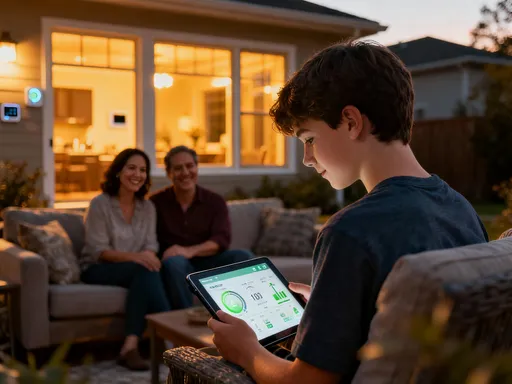
That’s the magic of today’s family-friendly tech: it turns energy saving from a chore into a shared mission. Interactive dashboards on tablets let kids see real-time data in a way that makes sense to them—like comparing their daily usage to a cartoon character’s energy budget. Voice assistants can give gentle nudges: “Hey, the living room lights have been on for two hours. Want to turn them off and save some power?” And some systems even let kids set their own energy goals and celebrate when they meet them with digital badges or small rewards.
The shift is subtle but powerful. Instead of feeling nagged, kids feel involved. Instead of rolling their eyes, they lean in. And parents? We get to stop being the energy police. We become coaches, cheerleaders, and partners in a mission that matters. Because when kids understand what they’re saving—and why—it stops being about rules and starts being about responsibility. They begin to see themselves as part of something bigger: a family that cares, not just about money, but about choices.
Personalization: Making Technology Fit *Your* Family’s Rhythm
Here’s the thing about smart home tech: it only works if it fits your life—not the other way around. A system that turns off the heat at 9 p.m. might be perfect for an early-to-bed family, but a disaster for teens who study late or parents working night shifts. That’s why the real power of today’s tools isn’t just automation—it’s personalization.
Think of it like this: your home learns your family’s rhythm. An AI-powered thermostat doesn’t just follow a schedule. It learns when your teenager usually comes home from practice, so it warms up the house just before they walk in. It notices that your partner likes the bedroom cooler at night, so it adjusts quietly while everyone sleeps. It even recognizes patterns—like how the kitchen lights stay on longer on weekends when you’re baking with the kids—and adapts without being told.
And it’s not just about temperature. Smart plugs and lighting systems can be customized for each person. You can set up profiles: “Mom’s Morning,” “Dad’s Workout,” “Kids’ Homework Time.” During homework, the system might dim background lights and turn off the TV to reduce distractions. During workout time, it powers up the speakers and adjusts the living room lights for movement. Even pets get in on it—some systems can detect motion from your dog pacing at night and avoid triggering alarms or turning on bright lights.
The beauty of personalization is that it removes friction. You don’t have to remember to adjust settings. You don’t have to argue about who left what on. The system just *knows*. And when technology feels invisible—when it just works—the more space you have for what really matters: time together, rest, and peace of mind. It’s not about living perfectly. It’s about living smarter, in a way that honors your family’s unique flow.
Real Tools, Real Talk: What Works (and What Doesn’t)
Let’s cut through the noise. There are *a lot* of smart home gadgets out there, and not all of them are worth your time—or your money. I’ve tried more than a few, and I’ll be honest: some are too complicated, some need constant updates, and some just don’t play well with others. But a few have made a real difference in my home. Let me tell you what’s worked—and what to watch out for.
Smart plugs are probably the easiest place to start. You plug them into an outlet, then plug your lamp, coffee maker, or TV into the smart plug. From your phone, you can turn it off remotely or set a schedule. I use one for my coffee maker—set to turn off an hour after I usually leave for work. It’s saved me from that “Did I turn it off?” anxiety more times than I can count. The best ones are simple to set up, work with voice assistants, and don’t require a hub. Just make sure you pick one that’s compatible with your home’s Wi-Fi and has good reviews for reliability.
Energy monitors are another game-changer. These small devices attach to your electrical panel and show you, in real time, how much power you’re using. Some connect to an app that breaks it down by time of day or even by appliance. When I first installed one, I was shocked to see how much energy our old fridge was using—especially at night. It helped me decide it was time for an upgrade. The downside? Some monitors are tricky to install or require a professional. Look for plug-in versions if you want something simpler.
Family energy apps are where the magic really happens. The good ones let you set goals, track progress, and even assign tasks. I set up one with my kids where they get a notification when a light has been on too long in an empty room. At first, they thought it was annoying. Then we turned it into a challenge: “Can you beat yesterday’s score?” Now, they race to respond. The key is choosing an app that’s easy to navigate, has a clean interface, and doesn’t bombard you with data. You want insight, not overwhelm.
And yes, there are pitfalls. Some devices need constant tweaking. Some apps crash. And not every gadget works with every system. But when you find the right combination, it’s like unlocking a new level of calm in your home. Start small. Try one or two tools. See what fits. And remember: it’s not about having the smartest house on the block. It’s about having a home that helps you live better.
Teaching by Doing: Raising Energy-Smart Kids
One of the most unexpected gifts of using smart energy tech has been what it’s taught my kids. It’s not just about saving money—though that’s nice. It’s about helping them understand the impact of their choices. And the best part? I didn’t have to give a lecture. The technology did the teaching for me.
Take last month, when my son saw a notification: “Great job! You saved enough energy today to power a video game for two hours.” That made it real for him. It wasn’t an abstract number on a bill. It was something he could see and feel. Another time, the app showed we’d saved the equivalent of planting three trees that week. He told his class about it the next day. That kind of pride? That’s priceless.
These tools turn invisible habits into visible results. When kids see their actions leading to real outcomes—whether it’s earning points, unlocking rewards, or helping the planet—they start to care. And when they care, they change. I’ve watched my daughter go from forgetting to charge her tablet overnight to setting her own reminders to unplug it when it’s full. She even started turning off lights in empty rooms at her friend’s house. “It’s just what we do at home,” she said.
As parents, we can use this data as a springboard for gentle conversations. “Did you notice how much energy we saved when we used the fan instead of the AC last night?” or “What do you think happens when we leave the TV on all day?” These aren’t lectures. They’re invitations to think, to notice, to grow. And over time, that awareness becomes part of who they are—not because we forced it, but because they experienced it.
Raising energy-smart kids isn’t about perfection. It’s about practice. It’s about showing them that small choices matter. And it’s about giving them tools that make those choices easier, clearer, and even fun. When they grow up, they won’t just know how to save energy—they’ll know how to live with intention.
The Quiet Revolution: When Your Home Starts to Care
After a few months of using these tools, something shifted. I stopped checking the app every day. I didn’t need to. The lights turned off on their own. The heat adjusted before anyone complained. The kids started reminding each other to unplug devices. The system wasn’t perfect—but it was working. And slowly, the noise of daily energy stress faded into the background.
That’s when I realized: the real revolution isn’t in the gadgets. It’s in the feeling. My home started to feel more thoughtful, more attentive. Like it was looking out for us. The constant mental load of “Did I turn that off?” lifted. The arguments about lights and screens faded. And in their place? More space for laughter, for connection, for just being together.
I remember one evening, my daughter looked up from her tablet and said, “We’re at 87% of our goal this week.” She wasn’t bragging. She was just noticing. And in that moment, I saw it: she wasn’t just living in this home. She was helping to care for it. That sense of shared responsibility—that quiet pride—was worth more than any savings on the bill.
This is what happens when technology fades into the background. It’s not about flashy features or complex settings. It’s about creating a home that supports your life, not complicates it. A home that helps you breathe easier, worry less, and feel more in control. And when your home feels like it’s on your side, everything else feels a little lighter.
A Smarter Home, a Closer Family: Where Technology Meets Heart
At the end of the day, this isn’t just about cutting the electricity bill. It’s about creating a home that reflects your values—care, connection, and responsibility. It’s about raising kids who understand that their choices matter. And it’s about giving yourself the gift of peace—the kind that comes from knowing you’re not fighting against your home, but moving through it with ease.
The best technology doesn’t replace human connection. It makes room for more of it. When you’re not nagging about lights or stressing over the meter, you have more energy—for listening, for playing, for just being present. And when your kids see you using tools to make life better, not just easier, they learn something powerful: that progress isn’t about doing everything perfectly. It’s about trying, adapting, and growing together.
So if you’re looking at that bill and wondering where to start, know this: you don’t need to do it all at once. Pick one thing. Try one tool. Involve your kids. Make it a game, a project, a family experiment. Celebrate the small wins. And remember—every step forward is a step toward a home that works for you, not against you.
Because when technology serves your family’s unique life, everyone wins. Your wallet breathes easier. The planet gets a little break. And your heart? It feels fuller, knowing you’re building something that matters—one smart, gentle choice at a time.