Tired of Worrying What’s Happening at Home While You’re at Work? This Changed Everything
Ever feel that nagging worry mid-workday—Is the front door locked? Did the kids get home safely? Is the dog okay alone? You’re not alone. That little voice in your head can drain your focus and steal your peace. But what if you could check in—just a quick glance—and instantly feel calm? Modern home monitoring isn’t about surveillance; it’s about reassurance. It’s like a quiet “everything’s okay” text from your home, letting you breathe easier and stay present—wherever you are.
The Midday Anxiety No One Talks About
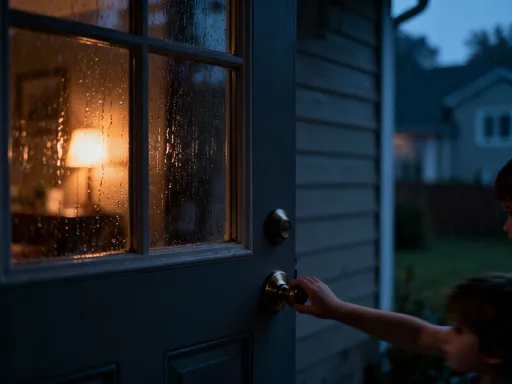
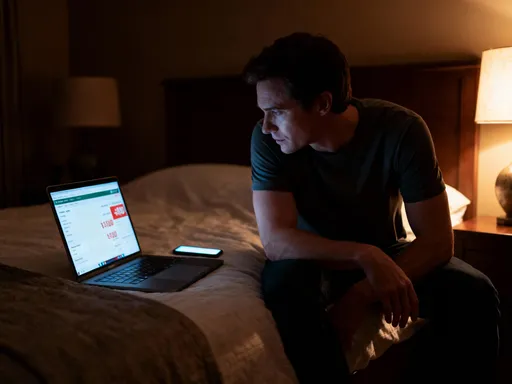
Let’s be honest—most of us don’t admit how often we worry during the day. You’re sitting in a meeting, halfway through an email, or sipping coffee during a rare quiet moment, and suddenly it hits: Did I lock the garage? Is the babysitter here yet? What if the dog barks and no one comforts her? These aren’t crisis-level fears, but they’re real. And they pile up. I remember the first time my 12-year-old came home from school alone. I’d given her the key, gone over the rules, and even set up a snack for her. But all afternoon, I kept imagining her sitting by the door, waiting, or worse—someone following her. My chest tightened every time my phone stayed silent. That’s when I realized: this wasn’t just about safety. It was about peace. And peace, I’ve learned, isn’t something you wait for. It’s something you build—sometimes with a little help from technology.
For so many of us—working moms, caregivers, remote workers, or even those living alone—this low-grade anxiety is just part of the background noise. We don’t talk about it because it sounds dramatic. But it’s not. It’s human. We care deeply about our homes and the people in them. And when we’re not there, that care turns into quiet concern. The good news? You don’t have to live with that knot in your stomach. You don’t have to choose between being present at work and feeling connected to home. There’s a middle ground. And it starts with knowing—not guessing.
How Home Monitoring Became My Peace of Mind
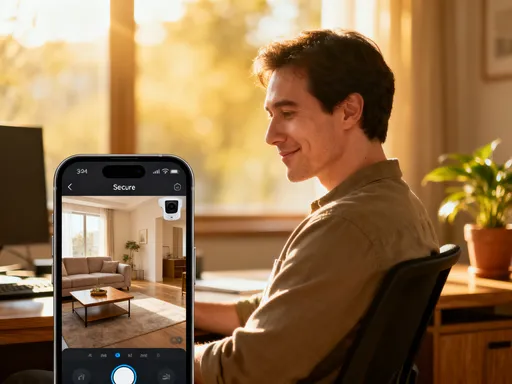
I didn’t jump into home monitoring because I wanted to “smart home” my life. I did it because one rainy Tuesday, my phone buzzed with a simple alert: “Side gate open.” Just five words. But they stopped me mid-sentence in a Zoom call. I glanced at the app, pulled up the camera, and sure enough—our backyard gate, which should’ve clicked shut after the dog went out, was swinging wide. A five-second video showed our golden retriever, Bella, sniffing around the edge, one paw already on the neighbor’s lawn. I used the two-way talk feature—“Bella, come on, sweetie!”—and she turned and trotted back. I closed the gate remotely, all from my laptop. No panic. No calls to the sitter. No imagining worst-case scenarios. Just a small moment, handled quietly, without stress.
That was the moment I realized this wasn’t about watching. It wasn’t about control. It was about connection. The system didn’t replace my attention—it extended it. Think of it like this: if your home could send you a quick note saying, “Hey, just a heads up,” wouldn’t that ease your mind? That’s what these tools do. They use simple sensors on doors and windows, motion-activated cameras, and mobile alerts to keep you in the loop. No complicated setup. No wires snaking through the house. Most systems today are wireless, easy to install, and designed for real life. They don’t record everything—they alert you only when something matters. And when you do check in, it’s in seconds. You see your kids laughing in the kitchen, your dog napping on the couch, or your mom putting the kettle on. That’s not surveillance. That’s reassurance.
It’s Not About Watching—It’s About Knowing
I get it. The word “monitoring” can sound a little… intense. Like Big Brother, or like you’re always on duty. But here’s the truth: this isn’t about watching every move. It’s about knowing when something’s off. It’s the difference between anxiety and awareness. Let me put it this way—if you had a friend who lived next door and texted you, “Front door’s unlocked,” would you feel relieved or creeped out? Probably relieved. That’s what these systems do. They’re like a thoughtful neighbor who notices things so you don’t have to.
And the best part? You’re in charge. You decide what to monitor and who sees what. I set up our cameras to cover common areas—entryways, the living room, the kitchen—but not private spaces. My teenagers know where the cameras are, and we’ve talked about why they’re there. It’s not about mistrust. It’s about safety. We even gave them access to the app so they can check things too. My daughter loves using it to make sure her younger brother got home okay from soccer. It’s become part of how we care for each other.
Privacy matters—deeply. That’s why I chose a system with end-to-end encryption and local storage options. I don’t want footage floating in some cloud I can’t control. And I don’t get constant notifications. I’ve customized the alerts so I only hear from the system when it’s important—like motion at night, a door opening when no one should be home, or a package delivery. It’s not about flooding my phone. It’s about giving me clarity when I need it. And honestly, those 10-second video clips—seeing my dog spin in circles when she hears the garage door, or watching my husband walk in with groceries—those little moments have become tiny joys. They don’t replace being home. But they make being away a little softer.
Real Life Moments That Made It Worth It
Let’s talk about the small wins—the moments that don’t make the news but make all the difference in a day. Like the time a delivery driver left a package on our porch during a storm. I got an alert, checked the camera, and saw the box getting soaked. I shot a quick text to my husband: “Grab the package before it turns into pulp!” He did, and we saved a new coffee maker from water damage. Simple? Yes. But how many times have we lost something because we didn’t know?
Or the afternoon our power went out. I was in a meeting when my phone buzzed: “Power disconnected.” I opened the app, saw the cameras were on battery backup, and used the live feed to check on Bella. She was pacing, anxious from the sudden quiet. I used the two-way talk to soothe her—“It’s okay, baby, Mommy’s here”—and she calmed down almost instantly. Later, I found out the outage was just 20 minutes, but those few seconds of connection made me feel like I hadn’t missed a thing.
Then there was the day my cleaning service was supposed to come, but I wasn’t sure if they’d arrived. Instead of calling or texting, I peeked at the front door camera. There they were, mopping the hallway. I didn’t need to interrupt my day—just a quick glance, and I knew everything was on track. No nagging doubts. No second-guessing. These aren’t life-or-death moments. But they’re life-preserving moments. They protect your time, your energy, and your peace. And over time, they add up to something powerful: confidence. You start to trust that your home is okay, even when you’re not there. And that trust? It follows you everywhere.
Picking the Right System Without the Headache
I won’t lie—when I first started looking, I was overwhelmed. So many brands. So many promises. “AI-powered motion detection!” “4K ultra-HD clarity!” “Smart home integration!” It felt like I needed a degree in tech just to pick a camera. But here’s what I learned: you don’t need the fanciest system. You need the right one for your life. Start by asking yourself a few simple questions. What keeps you up at night? Is it break-ins? Lost keys? Forgetting to lock the door? Or is it just wanting to know your loved ones are safe?
If you’re worried about packages, look for a doorbell camera with package detection. If you have pets, choose one with good night vision and two-way audio so you can talk to them. If you’re caring for an aging parent, a system with fall detection or routine check-in alerts might bring more comfort. But don’t get sucked into specs. That 8-megapixel camera won’t matter if the app crashes every time you open it. Focus on reliability, ease of use, and customer support. Read reviews—not the five-star hype, but the real ones from people like you. One mom wrote, “I don’t care about zoom levels—I care that I can see my kid’s face when he walks in the door.” That stuck with me.
Also, consider setup. Some systems require a hub, others connect directly to Wi-Fi. Some need professional installation, others you can set up in an afternoon. I went with a Wi-Fi-only system because I didn’t want extra boxes or monthly fees. And I chose one with a simple app—clean layout, easy navigation. Because if I’m stressed, the last thing I need is to hunt for a button. And don’t forget about storage. Do you want clips saved in the cloud? On a local card? I picked a model with both options so I can keep sensitive footage private. At the end of the day, the best system isn’t the one with the most features. It’s the one you’ll actually use—without frustration.
Setting It Up So It Actually Works for You
You’ve bought the system. Now what? I made the mistake of placing cameras to cover every corner—like I was setting up a security fortress. But after a week, I realized I wasn’t using them. Why? Because I kept getting alerts from the backyard when a squirrel ran by. Too much noise. Not enough signal. So I rethought my setup. Now, I place cameras where they give me the most peace—not the most coverage. The front door camera is angled to catch the porch and entryway. The living room camera shows the couch and the dog’s bed. I don’t need to see the entire room—I just need to see the people and pets I love.
Another game-changer? Naming the devices clearly. At first, I had “Camera 1,” “Camera 2,” “Backyard Sensor.” Confusing. Now, I renamed them: “Front Door,” “Living Room,” “Kids’ Entry,” “Garage Gate.” When an alert comes in, I know exactly where to look. No guessing. No stress. I also set up activity zones—areas where motion triggers alerts. I drew a box around the front walkway but excluded the tree line where animals pass. That cut down false alarms by 90%.
And alerts? I turned off most of them. I only get notified for front door motion, garage door activity, and nighttime movement in the hallway. Everything else? Silent. I check the app when I want to, not when it demands my attention. I also created a “first-week checklist”: test all sensors, share access with my husband, practice using two-way talk, and review one day of footage to see how it feels. That small ritual helped me trust the system faster. Because the goal isn’t to be always connected. It’s to be connected when it matters.
When Tech Meets Care: A New Kind of Connection
Here’s what I didn’t expect: this technology didn’t make me more distant from my home. It made me feel closer. It’s not that I check in all the time—I don’t. But knowing I can, when I need to, changes everything. It’s like having a quiet thread between me and the people I love. And that thread doesn’t pull me away from my work or my day. It frees me to be more present. Because when the worry is gone, space opens up—for focus, for joy, for breathing.
I’ve started using the app in sweet, unexpected ways. Like when my husband travels, I send him a clip of the kids saying goodnight. Or when my mom has a tough day, I check in to make sure she’s moving around okay—she knows and agrees, and it gives us both comfort. These aren’t surveillance moments. They’re care moments. They’re how we say, “I’m here. You’re not alone.”
And that’s the real gift of this technology. It doesn’t replace being home. It protects the feeling of home. It lets us care without hovering. It lets us trust without guessing. It turns “I hope they’re okay” into “I know they’re okay.” And in a world that asks so much of us—of our time, our energy, our hearts—that shift matters. It’s not about control. It’s about care. It’s not about watching. It’s about loving, from a distance, with a little help from a tool that understands what really matters: peace, connection, and the quiet certainty that home is safe—even when you’re not there.