I thought I wasn’t creative" — How daily micro-learning apps rewired my brain
You know that voice saying, "I’m just not the innovative type"? I heard it for years—until I started spending five minutes a day on an app that felt more like play than work. It didn’t promise genius or overnight success, but slowly, ideas began to flow. Turns out, creativity isn’t something you’re born with—it’s something you grow. And the right tools can make all the difference. I didn’t become an artist or an inventor, but I did start seeing solutions where I used to see only problems. My kitchen became a lab for simple recipe tweaks, my home organizing turned into clever storage hacks, and even my conversations with my kids felt more imaginative. This quiet shift didn’t come from a big retreat or expensive course. It came from tiny moments—little digital nudges that helped me believe, just a little more each day, that I could create something meaningful.
The Myth of the "Innovative Person"
For so long, I thought creativity was a gift handed out to a lucky few—people with wild hair, paint-splattered clothes, or those who launched startups before they turned thirty. I saw innovation as something loud, bold, and far beyond my world of grocery lists, school pickups, and folding laundry. If you’ve ever looked at a DIY project online and thought, "I could never do that," or dismissed your own ideas as "not good enough," you’ve felt it too. That voice whispering, "You’re just not that kind of person." But here’s what I’ve learned: that voice isn’t truth. It’s habit. It’s the echo of years telling ourselves we’re not smart enough, artistic enough, or brave enough to try.
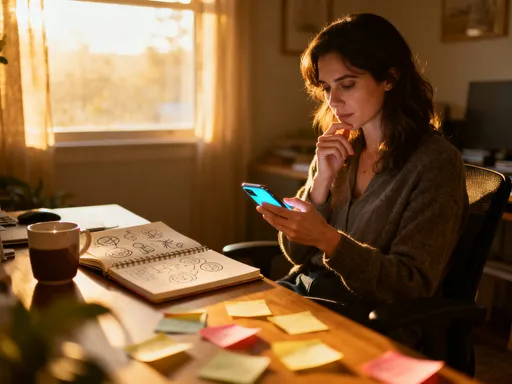
What changed for me wasn’t a sudden burst of confidence. It was an app—one that sent me a single five-minute challenge every morning. One day, it asked me to sketch a new way to organize my spice rack. The next, to write a silly story using three random words. Nothing grand. Nothing polished. But each tiny task gently challenged the idea that creativity had to be perfect or impressive. Over time, these micro-moments began to reframe what innovation really means. It’s not about creating a masterpiece. It’s about making a small choice—to try, to tweak, to imagine differently. And when you do that consistently, even in miniature, your brain starts to expect possibility instead of limitation.
Science supports this. Our brains are wired to recognize patterns and make connections. When we engage in regular, low-pressure creative exercises, we strengthen the neural pathways associated with flexible thinking. It’s like going to the gym for your imagination. You don’t need to lift heavy weights to see results—just consistent, manageable effort. The apps I used didn’t label themselves as "creativity trainers." They were framed as fun, curiosity-driven tools. But their design—short bursts, playful prompts, no grades or scores—made all the difference. They didn’t ask me to be brilliant. They just asked me to show up. And in that space of permission, something shifted. I stopped waiting to feel creative. I started acting creative—and eventually, I began to feel it too.
Learning That Fits Into Real Life
Let’s be honest—most of us don’t have time for traditional learning. Signing up for a course sounds good in January, but by February, life takes over. The kids get sick, the dishwasher floods the kitchen, and that online class gathers digital dust. I used to think real growth required big blocks of time and serious focus. But what if learning could happen in the cracks of your day? While you’re waiting for the coffee to brew? During the five minutes before your meeting starts? Or while you’re standing in line at the pharmacy?
That’s where micro-learning apps changed everything for me. They met me in the in-between moments—the ones I used to spend scrolling through social media. Instead of doomscrolling, I started micro-creating. These apps are designed to be lightweight, engaging, and emotionally safe. There’s no pressure to perform, no fear of failing a quiz, no instructor judging your progress. It’s just you and a small, inviting task. One app I loved asked me every morning: "What’s one way you could make today 1% better?" Some days, my answer was as simple as "put the clean towels in a basket instead of a pile." Other days, it sparked an idea for a new weekend routine with the kids. The beauty was in the consistency, not the complexity.
What makes these apps work so well is their respect for real life. They don’t demand perfection. They don’t require a quiet house or a dedicated desk. They work whether you’re tired, distracted, or multitasking. And because they’re interest-based—focused on topics you care about, like cooking, parenting, or home improvement—they feel personally relevant. You’re not learning abstract theories. You’re gathering practical sparks that you can use today. Over time, these tiny inputs add up. You start noticing patterns in your own thinking. You catch yourself solving problems before you even realize you’re doing it. And you begin to trust that you’re capable of more than you thought.
From Passive Scrolling to Active Creating
We’ve all been there—lying on the couch, phone in hand, scrolling endlessly through videos, articles, and photos. It feels like we’re absorbing something, but at the end of twenty minutes, we can’t remember a single thing. That kind of passive consumption leaves us feeling drained, not enriched. I used to wonder why I felt more tired after scrolling than after folding laundry. Then I realized: one is doing, the other is just watching. And our brains crave engagement, not just input.
That’s why switching from passive scrolling to active creating made such a difference. The micro-learning apps I used didn’t just show me information. They asked me to do something with it. A short video about color theory wasn’t the end—it ended with a prompt: "Snap a photo of something in your home that uses this color combo." A lesson on storytelling finished with: "Tell your child a two-minute bedtime tale using these three elements." These small actions transformed me from a spectator into a participant. And each time I completed a task, no matter how small, I felt a quiet sense of accomplishment.
That’s the power of intentional engagement. When you’re invited to create—even in a tiny way—you activate parts of your brain that passive viewing never reaches. You build confidence through action. You start to see yourself as someone who makes things, not just consumes them. One of my favorite moments was when my daughter said, "Mom, you’ve been drawing a lot lately." I hadn’t even realized I’d started doodling on napkins, sketching plant ideas for the garden, or jotting down little poems. But she noticed. And her observation made me realize how much my self-perception had shifted. I wasn’t just learning creativity. I was living it.
The Science Behind Tiny Wins
You might think big changes require big efforts. But neuroscience tells us the opposite: small, repeated actions are what rewire our brains over time. This concept is called neuroplasticity—the brain’s ability to form new connections based on experience. And the best part? It doesn’t matter how old you are. Whether you’re 35 or 55, your brain can still learn, adapt, and grow. The key is consistency, not intensity.
Micro-learning apps tap into this principle beautifully. They use techniques like spaced repetition—showing you ideas at optimal intervals so they stick—and gamified feedback, where completing a task gives you a little reward, like a badge or encouraging message. These aren’t childish tricks. They’re rooted in behavioral psychology. Positive reinforcement makes us more likely to repeat a behavior. And when that behavior is creative thinking, the effects compound.
One study from the University of California found that people who engaged in short, daily creative exercises reported higher levels of well-being and problem-solving ability after just two weeks. They didn’t become professional artists. But they became better at navigating daily challenges, thinking on their feet, and finding joy in small moments. That’s exactly what happened to me. I noticed I was quicker to come up with alternatives when plans fell through. I started asking more questions at work. I even began experimenting with meals instead of sticking to the same recipes. These weren’t dramatic changes. But together, they added up to a new way of moving through the world—one where I felt more capable, more curious, and more in control.
The apps I used didn’t overwhelm me with information. They focused on one idea at a time, often linking it to something familiar. For example, an app might teach the concept of "constraints fuel creativity" by asking, "What could you make using only three ingredients from your pantry?" That kind of exercise makes abstract ideas tangible. And because it’s tied to real life, it sticks. Over time, I began to see constraints—not as limits, but as invitations to think differently. A tight budget? A chance to get creative with meals. A small living space? An opportunity to design clever storage. The more I practiced, the more natural it became.
Building a Habit That Feels Good, Not Forced
We’ve all tried to build habits that fizzled out. Maybe you downloaded a meditation app, promised yourself five minutes a day, and then life got busy. Or you started journaling, only to abandon it after a week. The problem isn’t your willpower. It’s the design of the habit. If it feels like a chore, you won’t stick with it. But what if learning felt more like a warm cup of tea than a homework assignment?
That’s how the best micro-learning apps are designed—with joy in mind. They use gentle reminders, not guilt trips. They celebrate small progress, not perfection. One app I used sent me a weekly summary that said things like, "You’ve explored 7 new ideas this week—imagine where that curiosity could take you." No pressure. No judgment. Just encouragement. And because the tasks were fun—like designing a dream garden in under three minutes or writing a haiku about your morning coffee—I looked forward to them.
Another key was personalization. The apps learned what kinds of prompts I enjoyed and adjusted over time. If I engaged more with home-related ideas, I got more of those. If I skipped the poetry challenges, they didn’t push them. This made the experience feel supportive, not rigid. It wasn’t about forcing myself into a mold. It was about growing in a way that felt natural to me.
And because the time commitment was so small—just five to ten minutes a day—it was easy to protect that time, even on busy days. I didn’t need to clear my schedule. I just needed to pause during a quiet moment. Over time, this tiny habit became a anchor in my day. It wasn’t about adding more to my plate. It was about enriching the moments I already had. And that made all the difference in sustainability.
When Learning Connects You to Others
One thing I didn’t expect was how much these apps helped me feel less alone. I used to think of learning as something solitary—something you do with a book or a screen, all by yourself. But many of the micro-learning platforms I tried included simple ways to share your creations, see what others were doing, or exchange kind words. It wasn’t about competition or going viral. It was about connection.
For example, one app had a feature where you could post your daily idea and receive a "warm thought" from another user. No comments, no likes, just a short, kind message like "Love the color choice!" or "This made me smile." That tiny interaction created a sense of belonging. I wasn’t just doing this for myself. I was part of a quiet community of people who valued curiosity and kindness.
It reminded me of the women in my neighborhood who used to gather for coffee and share recipes or gardening tips. This was the digital version of that—gentle, supportive, and real. And because the interactions were low-pressure, they didn’t feel like another demand on my time. They felt like little gifts.
Sharing also helped me see my own progress. When I looked back at my old ideas, I could see how my thinking had evolved. I was taking bolder risks, using more color, playing with words more freely. And when others responded with warmth, it reinforced the value of showing up, even when I didn’t feel inspired. It wasn’t about being the best. It was about being part of something meaningful.
The Ripple Effect on Work, Home, and Self
After about six months of using these apps, I started to notice changes that went far beyond the screen. At work, I was more confident sharing ideas in meetings. I stopped waiting for the "perfect" solution and started offering small suggestions—ones that often sparked better ones. My boss even commented on how I’d become more proactive in problem-solving. I didn’t feel like a different person. I just felt more present.
At home, the shifts were even more tangible. I started a "family idea jar" where we each drop in a fun weekend activity or a new recipe to try. My kids love it. Last weekend, we built a blanket fort and turned it into a "science lab" where we tested which fruits make the best natural dyes. It wasn’t on any curriculum. It was pure, playful innovation—and it started with a simple prompt from an app: "What could you turn into a learning adventure today?"
But the deepest change was within me. I no longer hear that voice saying, "I’m not creative." Now, when I face a challenge, I hear a different question: "What’s one small way I could try something new?" That shift—from self-doubt to curiosity—has changed everything. I feel more alive. More capable. More like myself.
And the best part? This isn’t reserved for a special few. It’s available to anyone with a few minutes and a willingness to play. You don’t need a fancy degree or a big budget. You just need to start small, stay consistent, and trust that every tiny effort is shaping your mind in ways you can’t yet see. Creativity isn’t a destination. It’s a daily practice. And with the right tools, it’s something we can all grow—one micro-moment at a time.